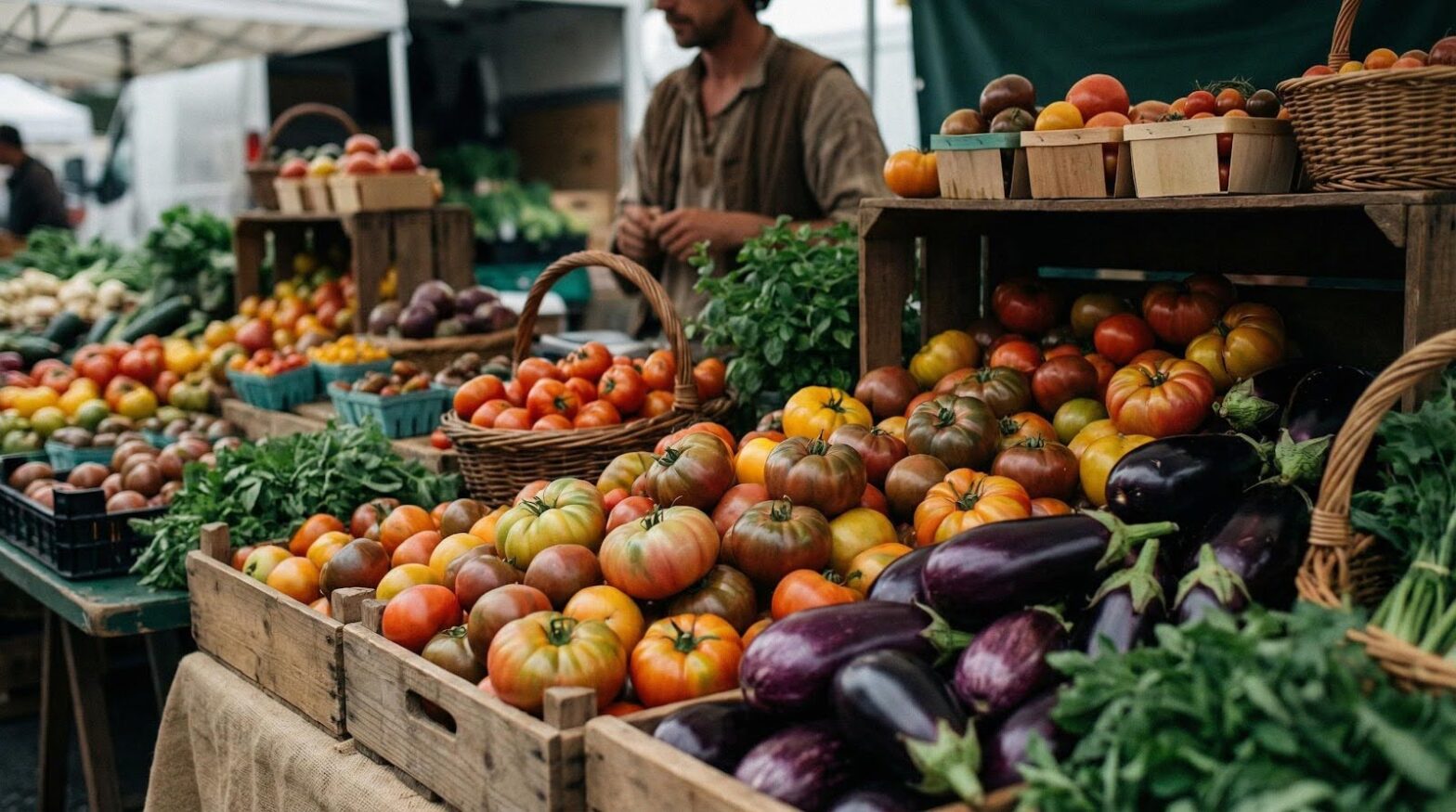
There’s something quietly reassuring about the way a neighborhood comes alive when people gather around food grown close to home. It’s not a grand, festival-like gathering with banners and speeches, but rather a steady pulse of a community expressing itself. Markets offer that kind of presence. They form the rare spaces where commerce feels like connection, where a routine purchase becomes a shared ritual, and where the neighborhood identity is shaped without anyone having to announce it. That’s often the perspective shared by lifelong NJ resident Tim Kealy, but it’s also a truth visible in any community that values its growers, makers, and small-scale producers.
It’s not meant to be loud at farmers’ markets. Farmers’ markets have a different kind of impact that develops slowly and steadily, and many people do not recognize this until they have participated in one for an extended period.
If you’ve ever visited a neighborhood stand thinking you would only spend a few minutes there but ended up staying longer, you understand the effect it has. They change your speed. They engage in casual conversations. They blur the boundaries between “neighbor” and “customer” in a manner that feels organic rather than between “neighbor” and “customer” in a way that feels natural instead of formal.
A Community Gathers, Even When No One Calls It an Event
Markets draw people who might never cross paths in daily life – parents on morning errands, older residents walking their regular routes, students looking for something seasonal, and commuters grabbing produce before heading home. They meet without planning to do so. There’s a shared understanding that this place, at this time, belongs to everyone.
That gathering creates a familiar presence. Over time, these weekly checkpoints become markers in the neighborhood’s rhythm. You know which vendor brings the first strawberries of the season, which baker sells before noon, and which grower gives updates on a crop that struggled or thrived.
The market becomes the setting where people recognize one another long before they learn names.
Trust Grows in Places Where Conversations Still Matter
Despite the efficiency of modern living, one thing has grown more and more uncommon: direct communication with the individual who produces the goods you purchase. That is the standard experience at a farmers’ market. You’re not reading a label designed for mass distribution or scanning a barcode. You’re speaking with the individual who sowed seeds, tracked the weather, fought bugs, and harvested when everything was ready.
That transparency creates trust, not in an abstract “shop local” sense, but in a grounded, practical way. You ask a question and get a real answer. You hear what conditions were like that week. You learn why a certain batch tastes different. These conversations don’t need to be long to be meaningful – they build a relationship based on consistency and care, which is something communities often lose when everything becomes transactional.
Also, faith has a way of making itself stronger. They come more often when people trust the farmers who feed them. When growers feel back, they put money into the market again. A loop forms, and it only needs respect, not organization or slogans.
Local Economies Quietly Strengthen When Neighbors Support Neighbors
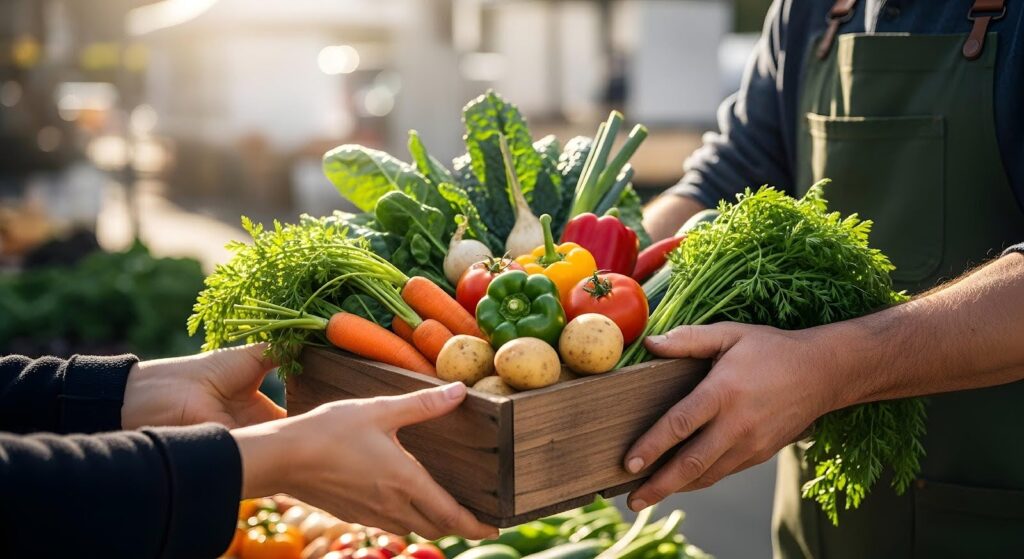
Farmers’ markets may look simple on the surface, but they have an outsized economic influence. Money spent there circulates differently. It stays closer. It supports families who live near you, land you walk past, and small operations that don’t have the buffers of large corporations.
More importantly, these markets help keep small farms viable at a time when many struggle. Every purchase becomes a signal: “Keep growing. Keep producing. This community wants what you bring.”
This stability makes it possible for a wide range of crops to grow. For example, heirloom varieties that wouldn’t live in a system of mass production, seasonal crops that only show up for a short time, and small-batch goods made by hand. As long as those options remain, the neighborhood food scene stays lively instead of consistent.
A strong local economy often begins with decisions that don’t feel like economic strategy at all. They feel like choosing the fresher option, talking to the grower, or buying something that reflects the season. Yet the impact is substantial.
A Neighborhood Gains a Sense of Identity
Every farmers’ market mirrors the character of its community. Some specialize in regional crops. Some highlight small artisan producers. Some are deeply tied to longstanding farming families, while others feature new growers bringing fresh ideas. This diversity gives the neighborhood a way to express itself through food, craftsmanship, and shared habit.
When a market becomes a regular part of people’s weekends, it gives them something to look forward to, talk about, and count on. It changes a community from a place where people live to a place where people meet.
And that, ultimately, is the most powerful and understated contribution of a farmers’ market: it reminds the neighborhood that it’s not just a collection of homes and streets. It’s a shared space where people invest in one another, often without realizing how significant those interactions truly are.